Understanding SI Joint Pain
Sacroiliac (SI) joint pain often mimics lower back issues, impacting daily life; exercises can offer relief, but proper diagnosis is crucial for effective management.
What is the Sacroiliac Joint?
The sacroiliac (SI) joint connects the sacrum – the triangular bone at the base of your spine – to the iliac bones of your pelvis. These joints are remarkably strong and stable, designed to transfer weight and impact from your upper body to your lower limbs. However, their inherent stability can sometimes lead to dysfunction, causing significant pain.
Unlike many joints, the SI joint has limited motion, primarily absorbing shock and providing stability. It’s a common, often overlooked, source of lower back and buttock pain. Understanding its structure and function is key to recognizing when issues arise, and why targeted exercises are often recommended as part of a comprehensive treatment plan. Dysfunction can stem from various factors, impacting mobility and causing discomfort.
Causes of SI Joint Dysfunction
SI joint dysfunction isn’t usually caused by a single event, but rather a combination of factors. These can include previous injuries like fractures or dislocations, or even repetitive stress from activities like running or cycling. Hormonal changes during pregnancy can also loosen ligaments, increasing joint instability.
Leg length discrepancies, scoliosis, and arthritis can contribute to uneven stress on the SI joints. Sometimes, even seemingly minor postural imbalances can play a role. Identifying the root cause is crucial for effective treatment, often involving a combination of exercises, physical therapy, and lifestyle adjustments. Addressing these underlying factors helps restore proper joint mechanics and alleviate pain.
Common Symptoms of SI Joint Pain
SI joint pain often presents as a dull, aching discomfort in the lower back, buttocks, or even the groin, thigh, or hip. Pain can be sharp and stabbing, but is more commonly described as a deep ache. It’s frequently felt on one side of the body, though it can be bilateral.
Many individuals experience pain that worsens with prolonged sitting, standing, walking, or climbing stairs. Stiffness in the morning or after periods of inactivity is also common. Unlike sciatica, SI joint pain rarely radiates below the knee. Symptoms can fluctuate, sometimes being barely noticeable and other times debilitating, impacting daily activities and requiring targeted exercises for relief.

Diagnosis of SI Joint Pain
Accurate diagnosis is key; a thorough physical exam and potentially imaging tests like X-rays or MRIs help pinpoint SI joint dysfunction and guide treatment.
Physical Examination Techniques
A comprehensive physical examination is the cornerstone of diagnosing SI joint pain. Healthcare professionals employ several tests to assess joint movement and identify pain provocation. These include palpation, where the examiner applies pressure to specific areas around the SI joint to detect tenderness. Movement tests, such as the FABER (Flexion, Abduction, External Rotation) test and the Gaenslen’s test, stress the SI joint to reproduce pain;
Furthermore, the examiner may assess leg length discrepancies and evaluate the patient’s gait. Specific muscle tests can also help identify imbalances contributing to SI joint dysfunction. A skilled clinician will correlate these findings with the patient’s reported symptoms and medical history to arrive at an accurate diagnosis, differentiating SI joint pain from other potential sources of lower back or hip discomfort.
Imaging Tests (X-rays, MRI)
While a physical exam is primary, imaging tests can help confirm SI joint dysfunction and rule out other conditions. X-rays can reveal structural abnormalities, such as arthritis or joint spacing irregularities, but often don’t directly show SI joint issues. MRI (Magnetic Resonance Imaging) provides more detailed images of soft tissues, potentially highlighting inflammation or ligament damage around the SI joint.
However, it’s important to note that imaging findings alone aren’t always conclusive. Many people without pain exhibit abnormalities on imaging, and vice versa. Sometimes, an injection into the SI joint, guided by fluoroscopy (real-time X-ray), is used both diagnostically and therapeutically to confirm the source of pain and provide relief. Imaging serves as a supportive tool, complementing the clinical evaluation.

Exercises for SI Joint Pain Relief ― General Principles
Consistent, gentle movement is key; listen to your body, avoid pushing through sharp pain, and prioritize core stability for optimal SI joint support.
Pain Scale & Monitoring
Utilizing a pain scale – typically ranging from 0 to 10, with 0 being no pain and 10 being the worst imaginable – is vital throughout your exercise program. Before, during, and after each exercise, honestly assess your pain level.
Consistent monitoring allows you to understand your body’s response and adjust accordingly. The goal is to perform exercises within a comfortable range, ideally keeping pain below a 4/10.
Documenting your pain levels in a journal or using a tracking app can reveal patterns and help identify exercises that exacerbate or alleviate your symptoms.
If pain exceeds 4/10, stop the exercise immediately and consult with your physical therapist or healthcare provider. Progress gradually, and remember that some mild discomfort is acceptable, but sharp, radiating, or increasing pain is a signal to stop.
Warm-up Exercises
Prior to initiating SI joint stabilization or strengthening exercises, a thorough warm-up is essential to prepare your muscles and joints. Begin with 5-10 minutes of low-impact cardiovascular activity, such as walking or stationary cycling, to increase blood flow.
Dynamic stretches are particularly beneficial. Include gentle pelvic tilts, focusing on controlled movements, and leg swings to improve range of motion in the hips and lower back.
Cat-cow stretches can also be incorporated to mobilize the spine and SI joints.
These warm-up exercises help to reduce stiffness, enhance flexibility, and minimize the risk of injury during more challenging exercises. Remember to listen to your body and avoid any movements that cause significant pain.

Specific Exercises for SI Joint Stabilization
Targeted exercises like pelvic tilts, bridging, cat-cow, and bird dog strengthen supporting muscles, improving SI joint control and reducing instability for lasting relief.
Pelvic Tilts
Pelvic tilts are a foundational exercise for SI joint stability, gently mobilizing the pelvis and strengthening core muscles. Lie on your back with knees bent and feet flat on the floor. Engage your abdominal muscles, then gently flatten your lower back against the floor, tilting your pelvis upward.
Hold for a few seconds, then relax and allow a small arch to form in your lower back. Repeat this tilting motion 10-15 times, focusing on controlled movement. Avoid holding your breath; breathe deeply throughout the exercise.
This exercise improves awareness of pelvic position and helps restore neutral alignment, reducing stress on the SI joint. Ensure pain doesn’t exceed 4/10 during performance.
Bridging Exercises
Bridging exercises effectively strengthen the glutes, hamstrings, and core – all vital for SI joint stabilization. Begin lying on your back with knees bent, feet flat on the floor, and arms at your sides. Engage your core and glutes, then lift your hips off the floor, creating a straight line from your shoulders to your knees.
Squeeze your glutes at the top of the movement, holding for a few seconds. Slowly lower your hips back to the starting position. Repeat 10-15 times, maintaining controlled movement.
Focus on preventing excessive arching in your lower back. Pain should remain below 4/10; modify if needed. This builds strength supporting the SI joint.
Cat-Cow Stretch
The Cat-Cow stretch gently mobilizes the spine and SI joints, improving flexibility and reducing stiffness. Begin on your hands and knees, ensuring your hands are shoulder-width apart and knees are hip-width apart. Inhale as you drop your belly towards the floor, arching your back and lifting your head and tailbone – this is the Cow pose.
Exhale as you round your spine towards the ceiling, tucking your chin to your chest and drawing your belly button in – this is the Cat pose. Continue alternating between Cat and Cow poses for 10-15 repetitions.
Move slowly and deliberately, focusing on the movement of your spine. Pain should be minimal; stop if discomfort arises.
Bird Dog Exercise
The Bird Dog exercise enhances core stability and strengthens the muscles surrounding the SI joint, promoting balanced support. Start on your hands and knees, maintaining a neutral spine. Simultaneously extend one arm forward and the opposite leg backward, keeping your core engaged and back flat.
Avoid arching your lower back or rotating your hips. Hold the extended position for a few seconds, then slowly return to the starting position. Repeat on the other side. Aim for 10-15 repetitions per side.
Focus on controlled movements and maintaining a stable core throughout the exercise. Pain should be minimal; modify if needed.
Advanced Exercises for SI Joint Strength
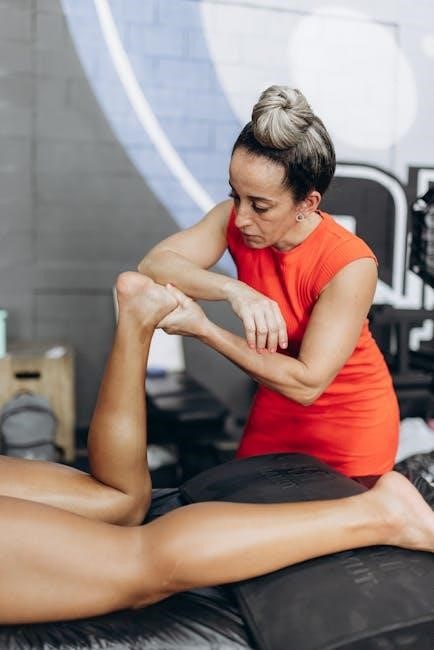
Strengthening exercises, like single leg raises and clamshells, build resilience around the SI joint, improving stability and reducing recurring discomfort over time.
Single Leg Raises
Single leg raises are a progressive exercise targeting the core and hip stabilizers, crucial for SI joint function. Begin lying on your back with knees bent and feet flat. Gently lift one leg straight up, keeping the core engaged and maintaining a neutral spine. Avoid arching your back or rotating your hips.
Hold for a few seconds, then slowly lower the leg back down. Repeat 10-15 times on each leg. As you gain strength, you can add ankle weights or perform the exercise on an unstable surface like a foam roller.
Important Note: If you experience any pain during this exercise, stop immediately and consult with a healthcare professional. Focus on controlled movements and proper form to maximize benefits and minimize risk of injury. This exercise builds strength without excessive strain.
Clamshells
Clamshells effectively strengthen the hip abductors – muscles vital for stabilizing the pelvis and SI joint. Lie on your side with knees bent and stacked, feet together. Keeping your feet touching, lift your top knee away from the bottom knee, like opening a clamshell.
Focus on engaging your glutes and maintaining a neutral spine; avoid rotating your pelvis. Hold briefly at the top, then slowly lower your knee back to the starting position. Repeat 10-15 times on each side.
Progression: Add a resistance band around your thighs for increased challenge. Ensure controlled movements and avoid any pain. This exercise promotes pelvic stability and reduces SI joint stress.
Hip Abduction Exercises
Hip abduction exercises target the gluteus medius, a key muscle for SI joint stability. Standing or lying on your side, slowly lift your leg outwards, keeping it straight and your core engaged. Avoid leaning or rotating your body; focus on isolating the hip movement.
Control the motion throughout the entire range, preventing momentum. Repeat 10-15 times on each leg. Using a resistance band around your ankles increases the challenge and effectiveness.
These exercises strengthen the muscles responsible for preventing pelvic tilting and maintain proper alignment, reducing strain on the SI joint. Listen to your body and stop if you experience any pain.
Stretches for SI Joint Pain
Stretching key muscles like the piriformis and hamstrings can alleviate tension around the SI joint, improving flexibility and reducing discomfort effectively.
Piriformis Stretch
The piriformis muscle, located deep in the buttock, can often contribute to SI joint pain when tight or inflamed. This stretch aims to release tension in this muscle, thereby reducing pressure on the sacroiliac joint. Begin by lying on your back with your knees bent and feet flat on the floor. Cross your right ankle over your left knee, forming a figure-four shape.
Gently pull your left thigh towards your chest, holding behind the thigh or over the shin. You should feel a stretch in your right buttock. Hold this position for 30 seconds, breathing deeply. Repeat on the other side. Avoid pulling too aggressively, and stop if you experience any sharp pain. Consistent performance of this stretch can significantly improve SI joint mobility and reduce associated discomfort.
Hamstring Stretch
Tight hamstrings can pull on the pelvis, increasing stress on the sacroiliac joint. Regularly stretching these muscles can help restore proper pelvic alignment and alleviate SI joint pain. A simple hamstring stretch involves lying on your back with one leg extended straight up towards the ceiling. Gently pull the leg towards you, keeping the knee as straight as comfortably possible.
You should feel a stretch along the back of your thigh. Hold this position for 30 seconds, maintaining a relaxed posture and deep breathing. Repeat on the other leg. Alternatively, you can perform this stretch seated, reaching for your toes. Avoid bouncing or forcing the stretch, and stop if you experience any sharp pain.
Lifestyle Modifications & Pain Management
Proper posture and supportive footwear are vital; minimizing strain on the SI joint through daily adjustments can significantly reduce discomfort and improve function.
Proper Posture
Maintaining proper posture is fundamental in managing SI joint pain and preventing future flare-ups. Consciously aligning your body minimizes stress on the sacroiliac joints and surrounding structures. When sitting, ensure your back is supported, feet are flat on the floor, and knees are at a 90-degree angle. Avoid prolonged sitting; take frequent breaks to stand and stretch.
Standing posture should involve a slight bend in the knees, shoulders relaxed and pulled back, and your core engaged. Avoid locking your knees or slouching. Be mindful of your posture during daily activities like lifting, bending, and walking. Distributing weight evenly and avoiding twisting motions can also protect your SI joints. Consider ergonomic assessments for your workspace to optimize your posture throughout the day.
Supportive Footwear
Supportive footwear plays a surprisingly significant role in managing SI joint pain, as it directly impacts biomechanics and stability. Shoes with adequate arch support help maintain proper alignment from the ground up, reducing stress on the pelvis and SI joints. Avoid high heels or completely flat shoes, as they can exacerbate imbalances.
Consider shoes with good cushioning to absorb shock during activities like walking or standing. If you have flat feet or overpronation, orthotic inserts can provide customized support and correction. Regularly assess your footwear for wear and tear, replacing shoes when they lose their support. Properly fitted shoes contribute to a more stable base, minimizing compensatory movements that can aggravate SI joint dysfunction.
Comments