St. Michael, the archangel who defeats Satan, is a central figure in Catholic iconography, symbolizing divine justice and protection. Guido Reni, an Italian Baroque master (1575–1642), captured this theme with dramatic chiaroscuro and graceful composition, blending realism with idealized spirituality art!?
St. Michael in Catholic Tradition
In Catholic theology, St. Michael the Archangel is revered as the supreme warrior who leads the heavenly hosts in the cosmic battle against evil. The name, meaning “Who is like God?” in Hebrew, underscores the paradox of divine humility and militant justice. The Archangel’s most celebrated act, the defeat of Satan, is depicted in the Book of Revelation (12:7‑9) where Michael and his angels cast the dragon from the sky, symbolizing the triumph of God’s will over demonic rebellion.
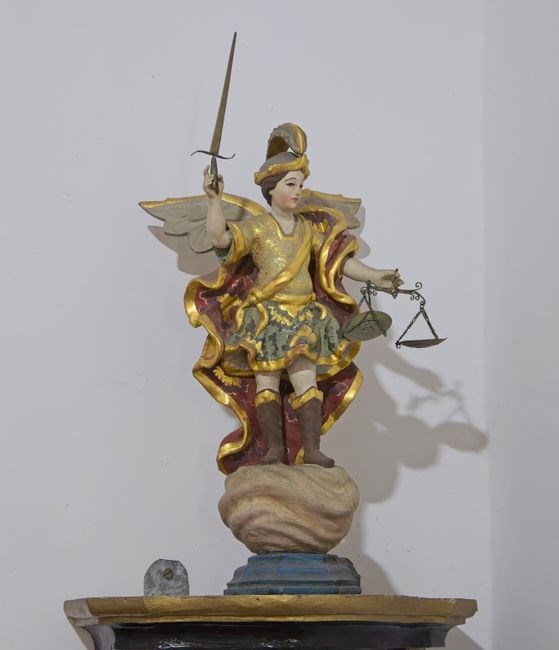
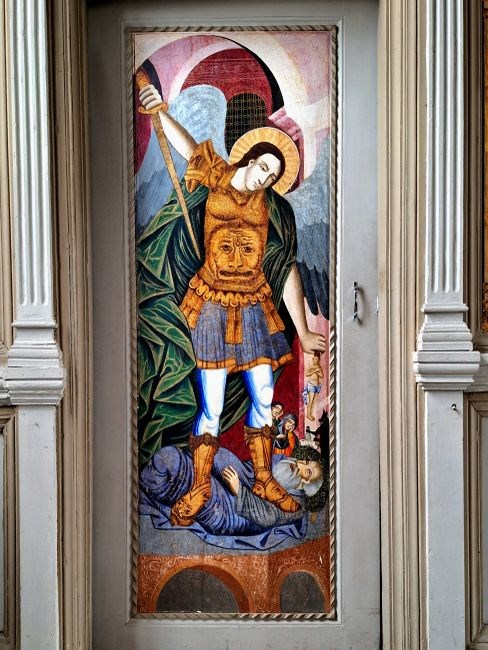
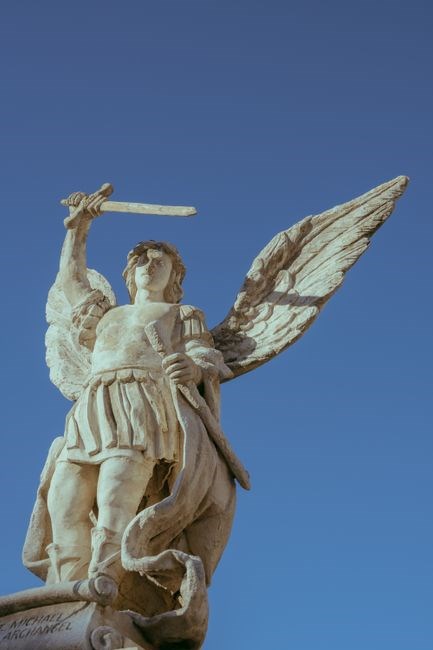
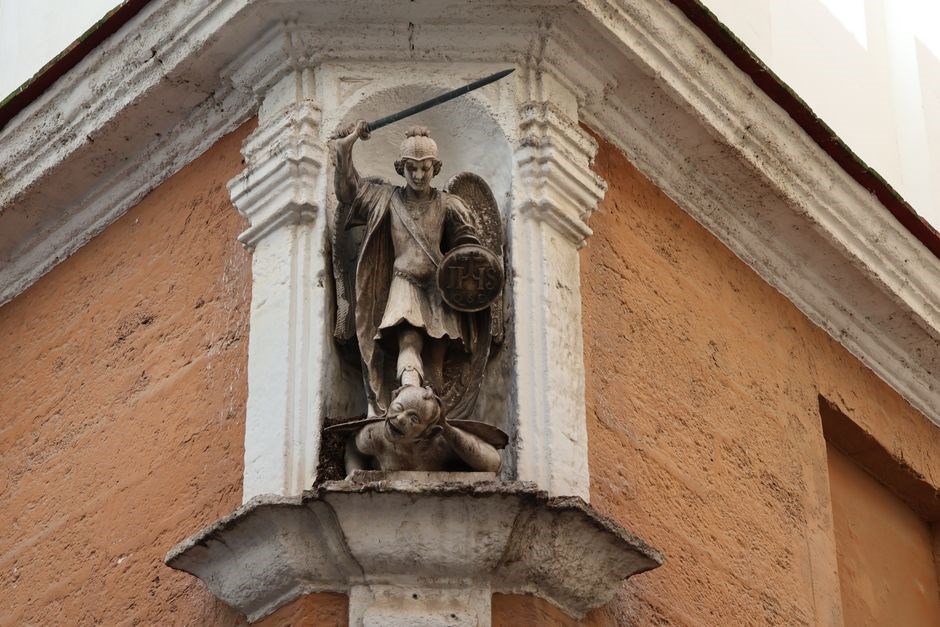
Iconographically, Michael is often portrayed in radiant armor, holding a sword or spear, and sometimes a scale to weigh souls. He stands on a lion or a serpent, signifying dominion over the beast of temptation. In many churches, statues and paintings of Michael are positioned near entrances or in chapels dedicated to protection, reflecting the belief that he safeguards the faithful from spiritual peril. The Feast of St. Michael, celebrated on September 29th, is a major liturgical event that commemorates his role as protector of the Church and the faithful.
Throughout history, the Archangel has been invoked in prayers for deliverance from sin and in the protection of communities. His presence is invoked in exorcisms, in the consecration of churches, and in the naming of military units. The Catholic Church continues to honor Michael with liturgical hymns, prayers, and the annual celebration of his feast, reinforcing his enduring role as the celestial defender of divine order.
Its enduring presence in liturgy and art continues to inspire devotion generationsall
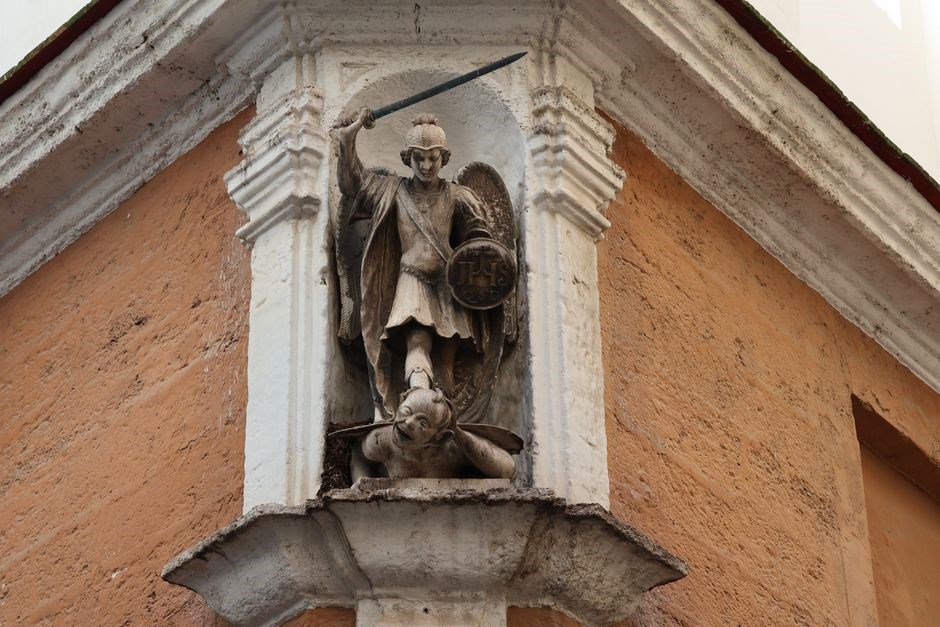
Guido Reni: Life and Style
Guido Reni (1575–1642) emerged from Bologna’s artistic milieu, where he absorbed the Mannerist legacy of the Carracci before forging a distinct Baroque language. His early apprenticeship under the Carracci brothers instilled a rigorous study of anatomy, perspective, and chiaroscuro, which later manifested in his luminous, dramatic compositions. Reni’s palette favored soft, warm tones that conveyed a sense of divine grace, while his brushwork combined precise linearity with fluid, almost lyrical, gestures. The artist’s signature style blended the realism of the Renaissance with an idealized spirituality, producing works that were both technically masterful and emotionally resonant. In 1635, he painted “St. Michael the Archangel Defeats Satan,” a monumental canvas commissioned by the Barberini family for the chapel of Santa Maria della Consolazione in Rome. The painting exemplifies Reni’s ability to portray the archangel as a heroic, almost ballet‑like figure, wielding a sword against a demonic foe whose visage was said to echo the cardinal Pamphilj. Reni’s influence extended beyond religious subjects; he also produced secular portraits and mythological scenes, each characterized by a harmonious balance between form and narrative. His later works, such as “The Rape of Europa,” demonstrate a continued refinement of light and movement, cementing his reputation as one of the most celebrated painters of his era. Reni’s legacy endures through technique, preserve of masterpieces in collections, and inspiration he gives artists seekingto merge precision with spiritual depth.
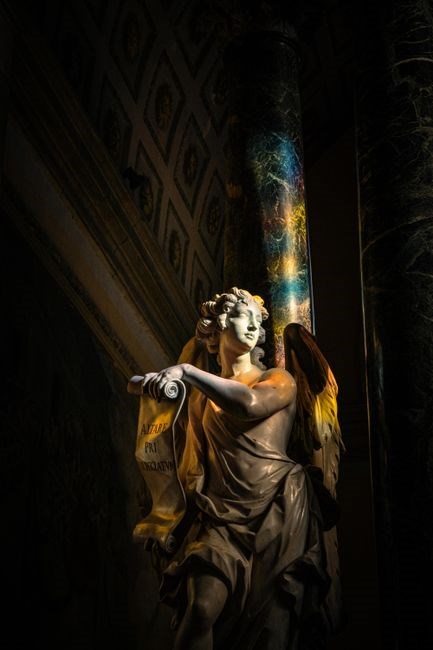
The Painting “St. Michael the Archangel Defeats Satan”
Guido Reni’s 1635 masterpiece, housed in Santa Maria della Consolazione, Rome, dramatizes the archangel’s triumph over Satan. The composition balances heroic light, movement, and detail, reflecting Reni’s Baroque mastery and theological depth. Reni’s use of light heighten drama, archangel’s stance conveys authority.
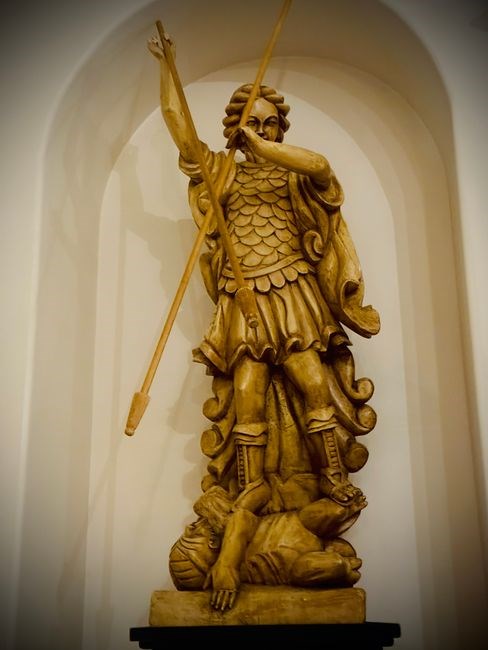
Date and Commission
In 1635, Guido Reni finished “St. Michael the Archangel Defeats Satan,” a canvas commissioned by Cardinal Antonio Barberini for Santa Maria della Concezione in Rome. Barberini, a leading patron of the Baroque, sought a powerful visual narrative for the chapel’s altarpiece that would embody divine justice over evil. Reni, known for his mastery of chiaroscuro and dynamic composition, embraced the commission with enthusiasm, integrating his characteristic elegance and dramatic intensity. The painting’s creation spanned several months; Reni studied the theological symbolism of the archangel’s armor, Satan’s posture, and the surrounding celestial light. Barberini’s patronage ensured the artwork would be prominently displayed, reinforcing the Church’s moral authority. The commission exemplifies the intersection of art, politics, and faith in 17th‑century Rome, illustrating how a single canvas could serve both devotional purposes and the ambitions of powerful patrons. Reni’s choice of a dramatic, theatrical composition aligned with the Counter‑Reformation’s emphasis on engaging the senses to inspire piety. The finished canvas, approximately 3.5 m high, demanded careful planning and multiple preparatory sketches. Its placement above the altar was designed to command the viewer’s attention, creating an immersive experience that reinforced the narrative of triumph over darkness. Contemporary accounts praised the technical skill and moral clarity of the work, cementing Reni’s reputation as a leading artist of his time. Reni collaborated closely with the chapel’s architect to match the canvas’s dimensions to the altar’s proportions. The unveiling ceremony drew high‑ranking clergy who praised its theological depth and artistic brilliance. Its impact on Baroque art remains profound today!.
Location: Santa Maria della Consolazione, Rome
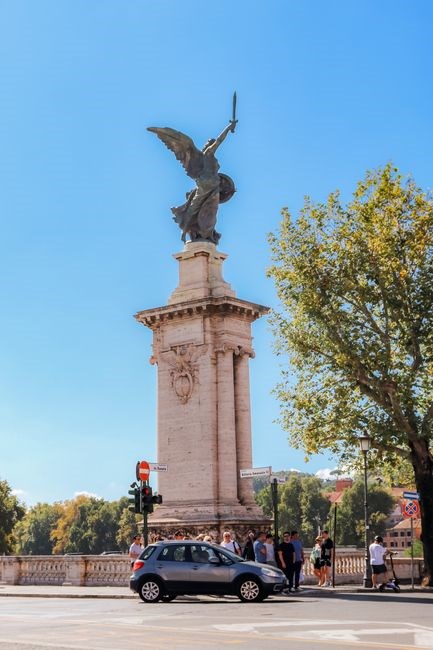
Santa Maria della Consolazione, a Baroque sanctuary in Rome’s historic center, houses Guido Reni’s “St. Michael the Archangel Defeats Satan.” The church, erected by the Barberini family, occupies a narrow piazza overlooking the Tiber. Its façade, designed by Carlo Maderno, features a restrained classical composition framing the interior’s dramatic frescoes. The nave, vaulted with ribbed arches, creates a luminous space where the archangel’s triumph is amplified by natural light and gilded stucco. Reni’s canvas hangs above the main altar, positioned to command the faithful’s gaze as they approach the sacramental table. The painting’s placement aligns with the Counter‑Reformation’s emphasis on visual theology, inviting viewers to contemplate divine justice. The sanctuary’s acoustics, enhanced by stone walls, echo rhythmic chants of the liturgy, creating an immersive sensory experience that complements the visual narrative. Visitors note the subtle integration of the artwork with the church’s architectural elements: the altar’s marble columns mirror the archangel’s armor, while the pulpit’s carved cherubs echo the celestial host surrounding Michael. The church’s interior is adorned with other Baroque masterpieces, yet Reni’s canvas remains a focal point, drawing pilgrims and art historians alike. The surrounding piazza, lined with cafés and historic palazzi, offers a panoramic view of Rome’s skyline, reinforcing the painting’s thematic connection between earthly devotion and heavenly triumph. Reni’s work continues to inspire contemporary interpretations of faith, art, and architecture within this venerable Roman setting. Legacy endures, inspiring!!.
Iconographic Details
In Guido Reni’s 1635 masterpiece, the archangel is depicted in a dynamic pose, his muscular frame clad in a polished bronze cuirass that glints with subtle chiaroscuro. The angel’s right hand, raised in a gesture of triumph, holds a gleaming sword whose blade is tipped with a radiant orb, symbolizing divine judgment. The left hand, extended toward the fallen figure, offers a gentle palm, hinting at mercy even in victory. Below the archangel, Satan is rendered as a grotesque, winged creature, his face contorted with rage and his claws reaching for the heavens. Reni’s use of color contrasts the warm, golden hue of Michael’s armor with the cool, shadowed tones of the devil, reinforcing the moral dichotomy. A subtle, almost imperceptible, cherubic choir hovers above, their translucent wings forming a subtle arch that mirrors the archangel’s own. The composition follows the Baroque tradition of dramatic movement, with diagonal lines guiding the eye from the lower left to the upper right, creating a sense of upward ascent. Its composition invites divine triumph!!! Its dramatic gesture echoes the triumph of faith now. Reni’s brushwork is meticulous, with fine cross‑hatching in the armor’s ridges and delicate sfumato in the angel’s flowing cape. The overall iconography emphasizes the triumph of divine order over chaos, a theme resonant with Counter‑Reformation ideals. The painting’s precise detail invites contemplation of the spiritual battle that underlies earthly existence, offering a visual sermon on faith, courage, and divine justice.
Related Works
Reni’s depiction of St. Michael appears in a 1624 Santa Maria della Concezione canvas, where the archangel’s triumph mirrors the Barberini’s patronage. A 19th‑century print of the same scene, housed in the Cappucini Church collection, reproduces the dramatic sword‑play, offering a study of Reni’s chiaroscuro and balance!.
Santa Maria della Concezione Version
In 1624, the Barberini family, led by Cardinal Antonio Barberini, commissioned Guido Reni to create a monumental canvas of St. Michael for the newly erected Santa Maria della Concezione in Rome. Reni’s composition, completed in 1635, places the archangel at the center of a dynamic celestial battlefield, his sword raised as he subdues a snarling Satan. The painting’s dramatic chiaroscuro highlights the angel’s muscular form and the swirling clouds, while the background’s faint, golden light suggests divine presence. The work reflects the Baroque fascination with theatricality and spiritual triumph, and it was intended to inspire the faithful within the chapel’s austere setting. Reni’s use of rich, jewel‑tone pigments and meticulous attention to anatomical detail aligns with his broader oeuvre, yet the Santa Maria della Concezione version remains distinct for its heightened emotional intensity and the subtle inclusion of the Barberini family’s heraldic symbols in the lower corners. Scholars note that the painting’s composition echoes earlier depictions by Caravaggio, yet Reni’s softer palette and idealized forms convey a more serene, hopeful vision of celestial warfare. The canvas has survived numerous restorations, most recently in the early 2000s, which preserved its original color vibrancy and clarified the intricate drapery. Today, the painting remains a key example of Reni’s mastery in conveying spiritual narratives through dynamic, yet harmonious, visual storytelling. Its enduring presence continues to inspire contemporary scholars and visitors, underscoring Reni’s pivotal role in shaping Baroque religious art. Its presence continues to inspire scholars, artists, reinforcing Reni’s influence on Baroque iconography, and its lasting legacy. Its vivid depiction invites contemplation, reminding viewers of divine triumph!
Cappucini Church Print Collection
Within the Cappucini Church’s archival holdings, a notable albumen silver print of St. Michael by Guido Reni survives, dating to the 1860s. The image, measured at 27 × 35.5 cm (10 5/8 × 14 in), was originally produced by the British photographer James Anderson (1813‑1877). The print preserves the archangel’s triumphant stance, the swirling clouds, and the snarling Satan, all rendered with the delicate tonal gradations characteristic of albumen silver photography. Scholars note that the photograph’s fidelity to the original painting allows contemporary viewers to study Reni’s use of chiaroscuro and anatomical precision without the need for a direct visit to Rome. The Cappucini Church’s collection also includes a smaller, 10 × 14 in study of St. Michael’s head, attributed to the French painter Jacques Louis David, which was derived from the same Reni canvas. This study, housed in the J. Paul Getty Museum, offers insight into the iconographic details—such as the archangel’s halo, the sword’s blade, and the subtle expression of divine resolve—that were integral to Reni’s portrayal. The Cappucini Church Print Collection thus serves as a critical bridge between the original 17th‑century masterpiece and modern scholarship, preserving the legacy of Guido Reni’s artistic vision for future generations. The reproduction of this print, available in the museum’s digital archive, allows scholars worldwide to examine Reni’s brushwork and color palette in detail, thereby fostering a deeper appreciation of his contribution to Baroque religious art!!!…
Influence and Reception
Reni’s dynamic St. Michael captivated 17th‑century patrons and later writers. Nathaniel Hawthorne, inspired by the painting, adapted its dramatic struggle in “The Marble Faun.” Critics note the work’s allegorical depth, linking celestial triumph to human moral conflict. 2026!!
Nathaniel Hawthorne and “The Marble Faun”
In the early 19th century, American novelist Nathaniel Hawthorne visited Rome and encountered Guido Reni’s monumental depiction of St. Michael the Archangel defeating Satan in Santa Maria della Consolazione. The dramatic interplay of light and shadow, the heroic posture of the angel, and the visceral tension between celestial and demonic forces left an indelible impression on Hawthorne. He later translated this visual drama into his own literary canvas, crafting the tale of the marble statue in “The Marble Faun.” The novel’s central motif—a marble figure that embodies both beauty and moral ambiguity—mirrors Reni’s portrayal of the archangel’s triumph over sin. Hawthorne’s fascination with the painting is documented in his letters, where he describes the scene as “a living tableau of divine judgment.” Scholars note that the novel’s exploration of the conflict between earthly desire and spiritual duty echoes the iconographic themes in Reni’s work, underscoring the enduring dialogue between art and literature across centuries. Reni’s use of dramatic chiaroscuro and dynamic composition set a new standard for Baroque religious art, influencing contemporaries and later generations. The painting’s vivid depiction of the archangel’s triumph over evil resonated with 19th‑century Romantic sensibilities, especially the fascination with sublime struggle. Hawthorne’s own prose reflects this aesthetic, blending visual imagery with psychological depth. The novel’s setting in a Roman villa recalls the grandeur of Reni’s frescoes, while the marble statue’s silent presence parallels the angel’s silent judgment. Thus, Reni’s masterpiece served as both inspiration and thematic mirror for Hawthorne’s literary exploration of virtue, temptation, and redemption. The dialogue between visual and literary art continues to fascinate scholars!?
Allegorical Interpretations
Guido Reni’s St. Michael the Archangel Defeats Satan is replete with symbolic gestures that invite layered readings. The archangel’s raised sword, a traditional sign of divine authority, is rendered with a dramatic flourish that suggests the triumph of reason over passion. The fallen Satan, rendered with a contorted face that scholars note bears resemblance to Cardinal Pamphilj, embodies the corrupting influence of earthly power. Reni’s use of light—an almost divine glow that bathes Michael—serves as an allegory for the illumination of faith, while the surrounding darkness underscores the pervasive threat of sin. The angel’s posture, a blend of military precision and balletic grace, hints at the disciplined yet passionate nature of spiritual warfare. The composition’s balance, with Michael centered and Satan at the periphery, reinforces the idea that divine justice is both focused and encompassing. The fresco’s setting in Santa Maria della Consolazione, a church built by the Barberini family, adds a layer of patronage symbolism, linking the painting’s moral message to the political aspirations of Rome’s elite. Reni’s choice of palette—rich golds and deep blues—evokes the heavens, while the earthy tones of Satan’s attire ground the scene in human frailty. Together, these elements create a visual allegory that speaks to the eternal struggle between good and evil, faith and corruption, and the human capacity for redemption through divine intervention. Scholars note Reni’s brushwork hints at a celestial dance, implying the archangel’s victory is decisive!
The enduring legacy of Guido Reni’s St. Michael the Archangel Defeats Satan lies not only in its artistic mastery but also in its capacity to resonate across centuries. Reni’s synthesis of Baroque dynamism with theological symbolism invites viewers to contemplate the perpetual contest between divine authority and human frailty. The painting’s placement within Santa Maria della Consolazione, a space steeped in the ambitions of the Barberini family, underscores the intertwining of religious devotion and political aspiration during the early seventeenth century. Contemporary scholars have noted how the work continues to inspire reinterpretations, from literary allusions in Nathaniel Hawthorne’s “The Marble Faun” to modern exhibitions that highlight its allegorical depth. By juxtaposing the celestial triumph of Michael against the palpable menace of Satan, Reni encapsulates a universal narrative of hope, resilience, and moral clarity. This masterpiece remains a testament to the enduring power of art to convey complex spiritual truths, bridging the gap between the earthly and the divine. As viewers step into the church’s dimly lit nave, the fresco’s luminous glow seems to echo the timeless promise that righteousness, when guided by faith, will ultimately prevail over darkness. In this way, Reni’s work continues to serve as a beacon for both believers and art enthusiasts, reminding us that the struggle for virtue is an ongoing journey, illuminated by the steadfast light of divine justice.
Comments